Not All Worms Are Created Equal
Here's something that surprises a lot of new composters: you can't just dig up worms from your garden and throw them in a bin. Regular earthworms (like the common nightcrawler Lumbricus terrestris) are deep-burrowing soil dwellers. They need feet of soil depth, cool temperatures, and a very different environment than what a worm bin provides.
Composting worms, on the other hand, are epigeic — they live in the top few inches of soil in decomposing organic matter. They're adapted to eating rotting material, reproducing quickly, and living in dense populations. They're also much more tolerant of the conditions inside a bin.
The Two Main Composting Worm Species
Red Wigglers (Eisenia fetida)
Red wigglers are the gold standard of composting worms, and for good reason. They're the species you'll find in almost every vermicomposting guide, and they're what most worm bin retailers sell.
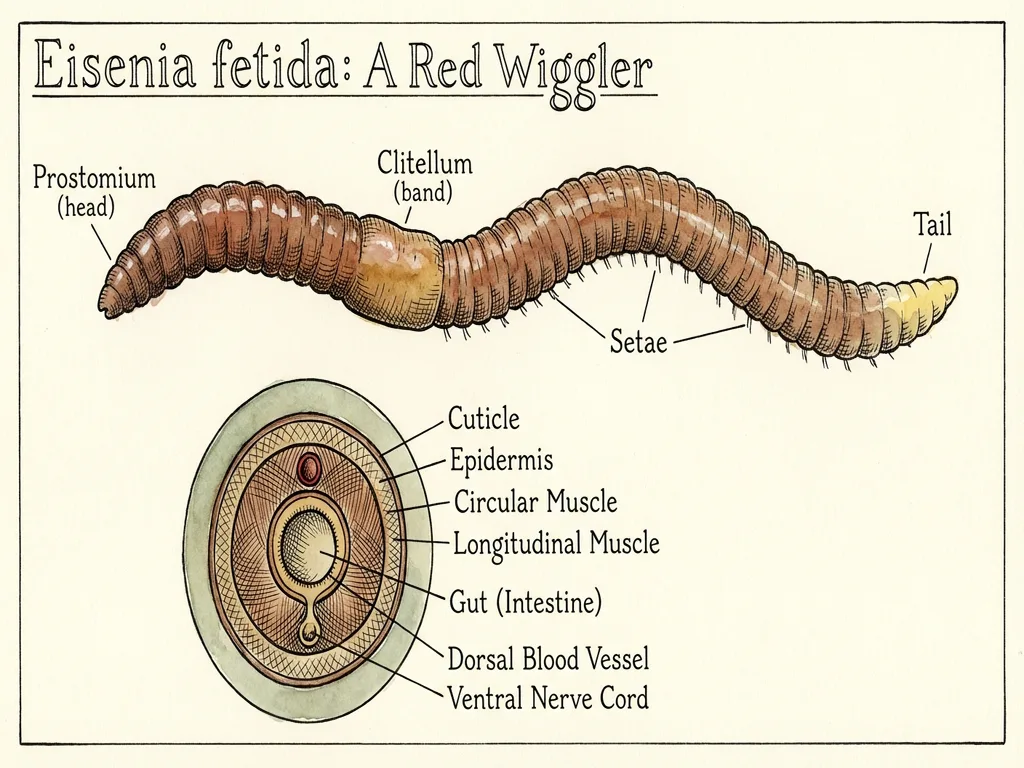
Why red wigglers are great:
- Voracious eaters. They can consume roughly half their body weight in food per day. A pound of red wigglers (about 1,000 worms) can process about half a pound of food scraps daily.
- Prolific reproducers. Under good conditions, red wigglers double their population every 2-3 months. Each worm produces about 2-3 cocoons per week, each containing 2-5 baby worms.
- Temperature tolerant. They thrive in 55-77°F (13-25°C) but can survive from about 40°F to 85°F.
- Community oriented. They love living in dense clusters, which is perfect for the confined space of a worm bin.
- Hardy and forgiving. They tolerate beginner mistakes better than most species.
Where they fall short:
- Not ideal for directly improving garden soil (they prefer organic matter on the surface)
- Smaller than some other species, which bothers people who are squeamish about tiny worms
European Nightcrawlers (Eisenia hortensis)
Also called "Euros" or "Super Reds," European nightcrawlers are the second most popular composting worm. They're larger than red wigglers and have some distinct advantages.
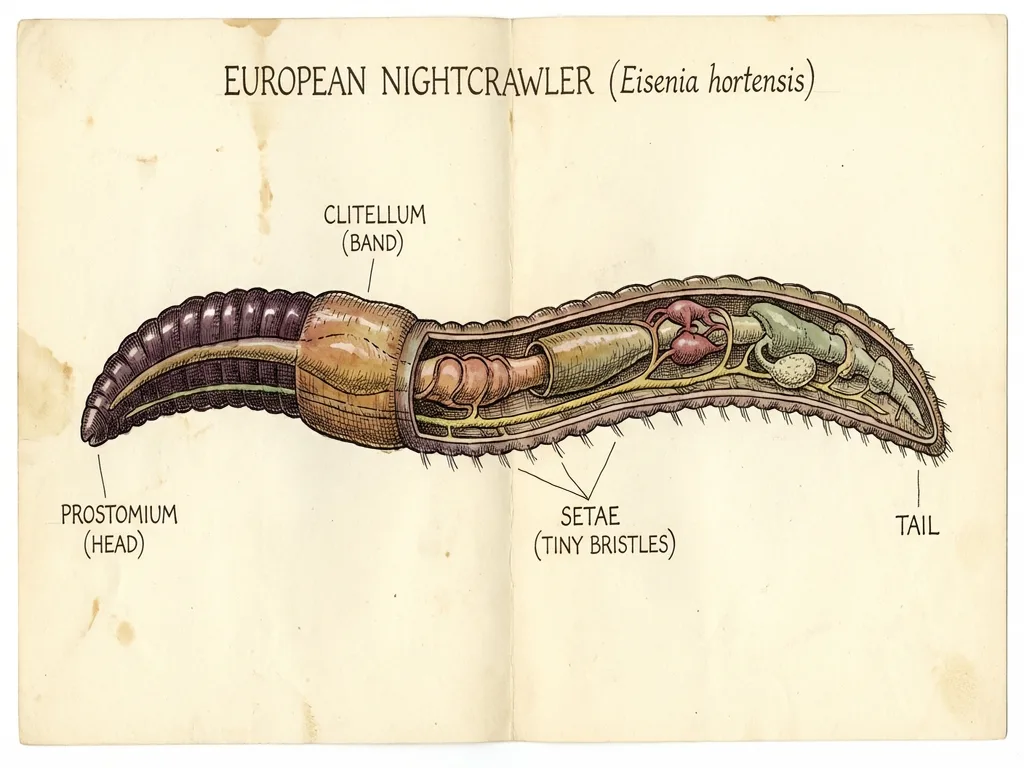
Why Euros are great:
- Larger size. They're 2-3x bigger than red wigglers, making them easier to handle and better for fishing bait.
- Soil improvers. They'll actually burrow into and improve garden soil when added directly, unlike red wigglers.
- Good composters. While not quite as fast as red wigglers at processing food, they still do an excellent job.
- Tolerate cooler temps. They can handle slightly cooler temperatures than red wigglers.
Where they fall short:
- Slower to reproduce than red wigglers
- More expensive to buy initially
- Can be more sensitive to bin conditions
- Need a bit more space per worm
Which Should You Choose?
For most beginners: go with red wigglers. They're cheaper, reproduce faster, process food more efficiently, and are more forgiving of mistakes. They're the tried-and-true choice.
Consider European nightcrawlers if:
- You also want worms for fishing bait
- You plan to eventually release worms into your garden soil
- You prefer handling larger worms
- You live in a cooler climate
Pro tip: Many experienced vermicomposters keep both species in the same bin. They occupy slightly different niches and can coexist peacefully.
How Many Worms Do You Need?
The general rule of thumb is 1 pound of worms per 1/2 pound of daily food waste. For a typical household:
| Household Size | Daily Food Waste | Worms Needed |
|---|---|---|
| 1-2 people | 1/4 - 1/2 lb | 1 lb (~1,000 worms) |
| 3-4 people | 1/2 - 1 lb | 1-2 lbs |
| 5+ people | 1+ lb | 2-3 lbs |
Don't worry about getting the exact right amount. If you start with too few worms, they'll reproduce to match the food supply within a couple months. Starting with 1 pound of red wigglers is the sweet spot for most people.
Where to Buy Composting Worms
Online Retailers
Buying online is the most common method. Worms ship surprisingly well through the mail — they arrive in a bag of moist peat moss and are usually alive and healthy after 2-3 days of transit.
Look for retailers who:
- Specialize in composting worms (not bait shops)
- Offer a live arrival guarantee
- Ship in insulated packaging during extreme weather
- Have good reviews from other vermicomposters
Expect to pay: $25-40 per pound of red wigglers, $30-50 per pound of European nightcrawlers (prices include shipping).
Local Sources
- Local worm farms. Check if there's a vermiculture operation near you. Buying local means fresher worms and no shipping stress.
- Gardening clubs and community composting groups. Members often have excess worms to share or sell cheaply.
- Craigslist/Facebook Marketplace. Search for "red wigglers" or "composting worms."
- Bait shops. Some sell red wigglers, but be careful — many sell "red worms" that are actually a different species. Confirm you're getting Eisenia fetida.
Can You Find Them in Nature?
Technically, yes — red wigglers live in manure piles, compost heaps, and leaf litter. But collecting wild worms is unreliable and slow. You might also introduce pests or non-composting species. For a few bucks, buying ensures you get the right species in the right quantity.
Identifying Your Worms
How do you know you've got the right species?
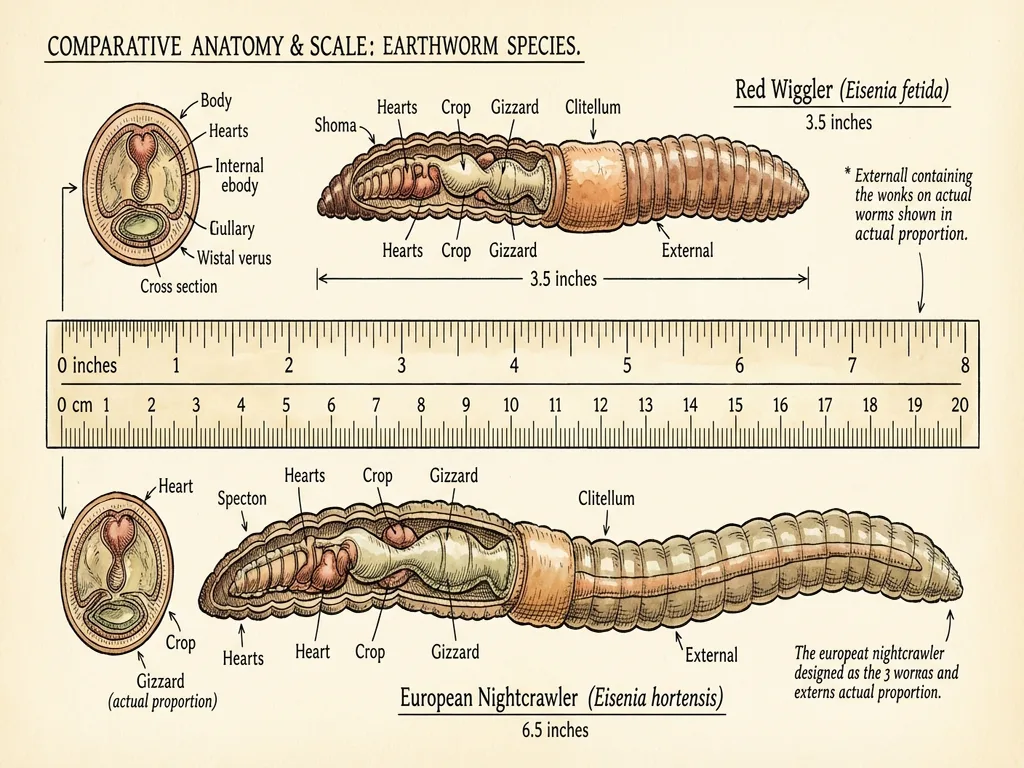
Red Wigglers
- 2-3 inches long when mature
- Red to reddish-brown color with yellowish tail
- Distinct banding (alternating light and dark stripes)
- When disturbed, they wiggle vigorously (hence the name)
- May release a mildly unpleasant odor when stressed (a defensive mechanism)
European Nightcrawlers
- 3-5 inches long when mature
- Darker, more uniform reddish-brown
- Less pronounced banding
- Move more slowly than red wigglers
- Tend to stretch out when handled rather than curling up
Caring for Your Worms
Once you have your worms, the key to keeping them happy is maintaining the right environment:
- Moisture: Bedding should feel like a wrung-out sponge. Worms breathe through their skin and will die if they dry out.
- Temperature: 55-77°F is ideal. Move the bin indoors during extreme heat or cold.
- Food: Feed regularly but don't overfeed. See our feeding guide.
- Darkness: Worms are photophobic. Keep the bin covered.
- pH: Slightly acidic to neutral (pH 6-7). Crushed eggshells help buffer acidity from fruit scraps.
Worm Reproduction: What to Expect
Red wigglers are hermaphrodites — each worm has both male and female organs. However, they still need to mate with another worm to reproduce. After mating, each worm produces a small, lemon-shaped cocoon (about the size of a grain of rice).
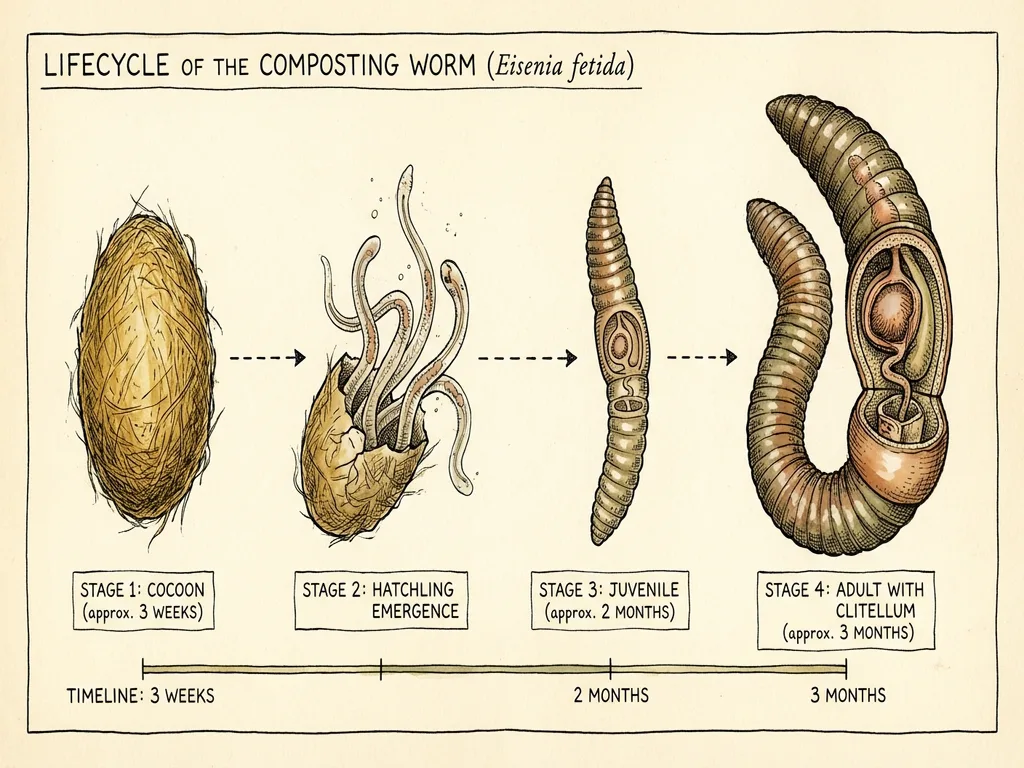
- Cocoons start yellowish and darken to reddish-brown as they mature
- Each cocoon hatches 2-5 baby worms after 3-4 weeks
- Baby worms are tiny (about 1/2 inch), translucent, and hard to see
- They reach maturity in about 2-3 months
- Under ideal conditions, a population can double every 60-90 days
You'll never need to buy worms again after your initial purchase. In fact, you'll probably end up giving worms away to friends.
Next Steps
- Getting Started with Worm Composting — The complete beginner's guide
- Building Your First Worm Bin — Give your worms a home
- Feeding Your Worms — What to feed (and what to avoid)
Species Comparison Tool
Compare species side-by-side and calculate how many worms you need:
Red Wiggler
Eisenia fetida
European Nightcrawler
Eisenia hortensis
Population Calculator
Red Wiggler
Recommended start: 2,000 worms (2 lbs)
Starting with 2,000 worms, you'll have ~16,000 worms by month 6
European Nightcrawler
Recommended start: 900 worms (2 lbs)
Starting with 900 worms, you'll have ~3,600 worms by month 6
Worm cocoons hatch in 3-4 weeks, producing multiple baby worms each.
Red wigglers reach 3-4 inches; nightcrawlers grow up to 7 inches.